Drafting New Freedoms
The Process of Achieving Independence.
-
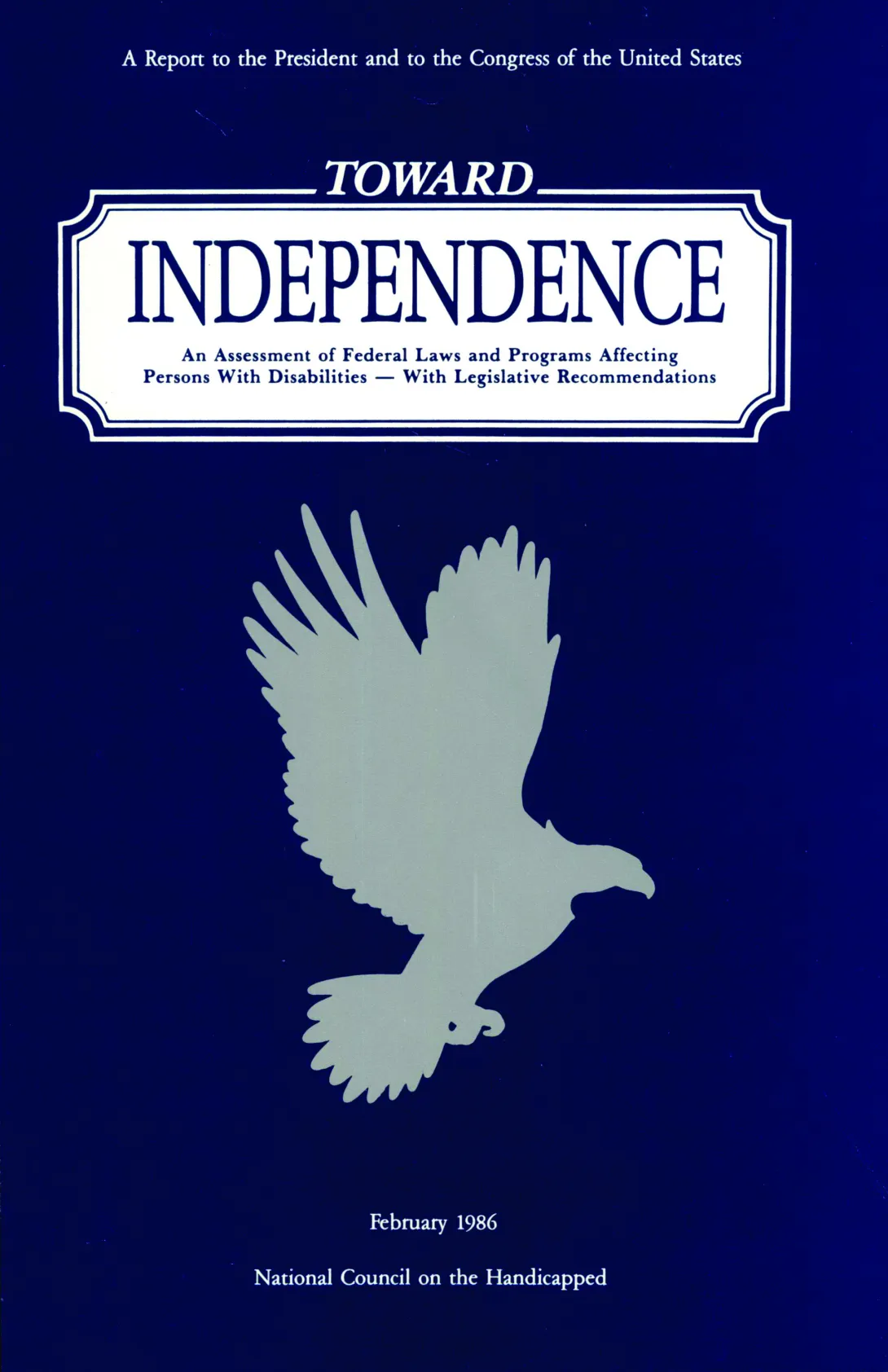
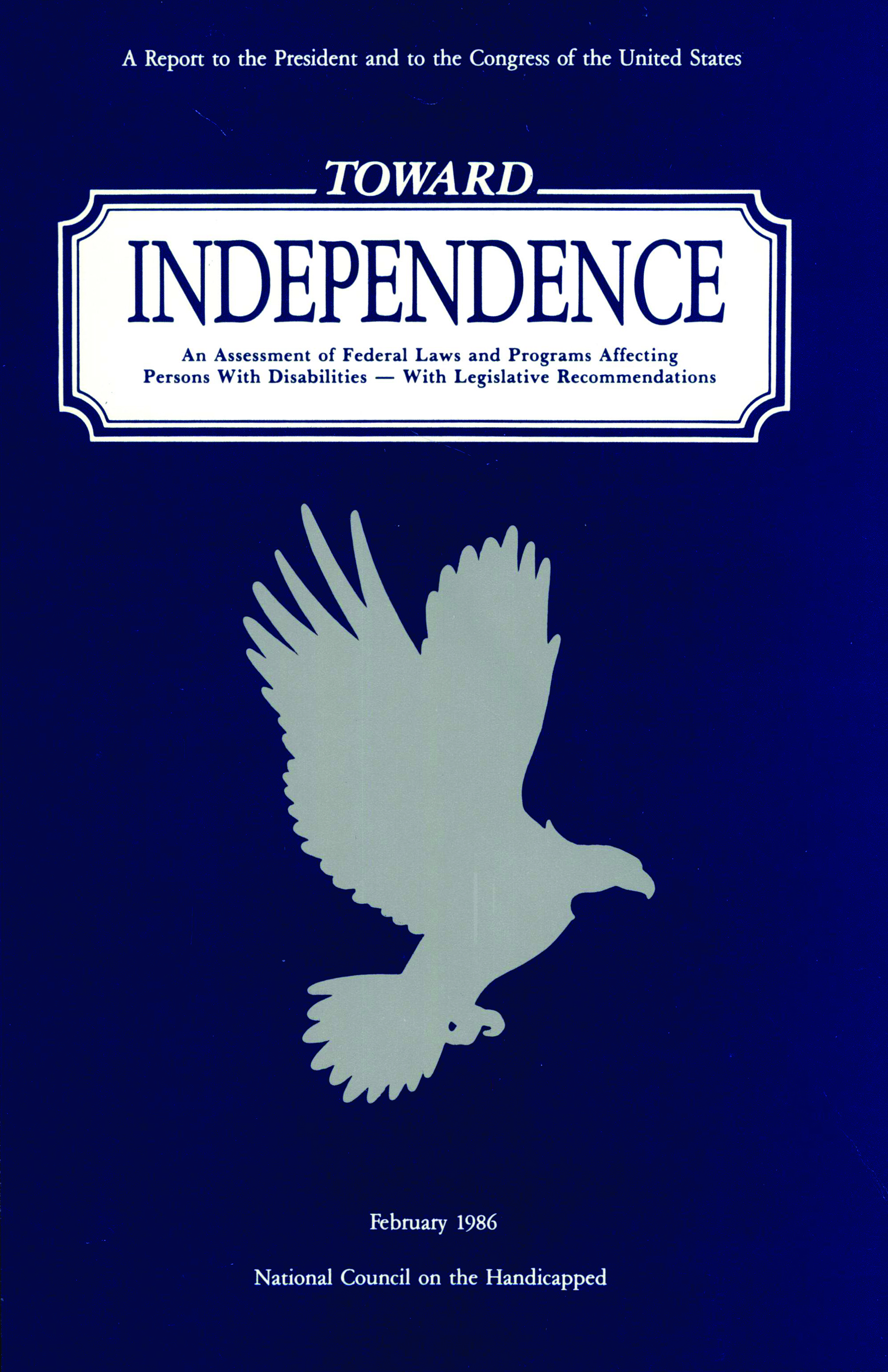
"Toward Independence: An Assessment of Federal Laws and Programs Affecting Persons With Disabilities" [National Council on the Handicapped] [1986]
-
National Council on Disability
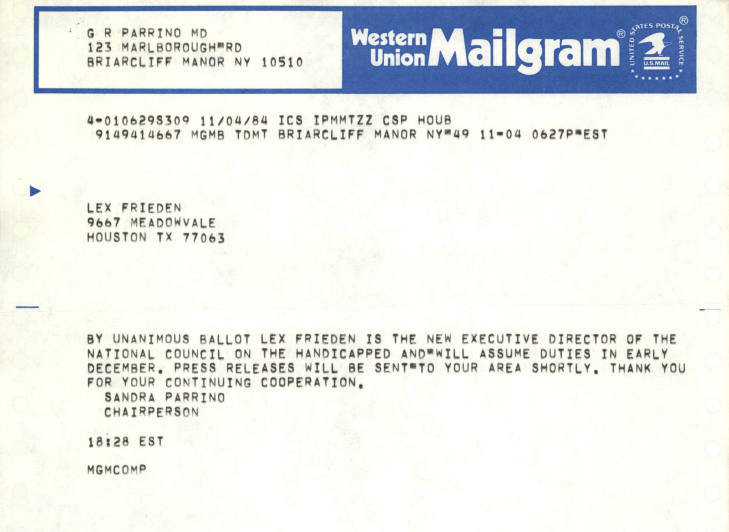
1978 Amendments to the Rehabilitation Act of 1973 established the National Council on the Handicapped, known as the National Council on Disability since 1988. First under HEW, then the Department of Education, the 1984 Amendments to the same act established it as an independent agency. The White House named Lex Frieden as the first executive director. A leader in the independent living movement in Texas, he was instrumental in crafting the Americans with Disabilities Act.
-
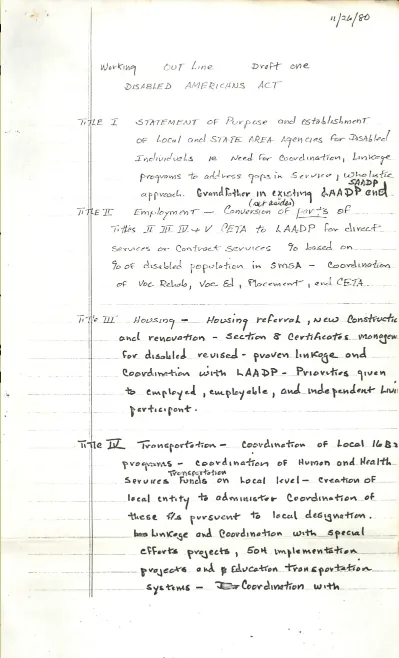
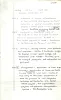
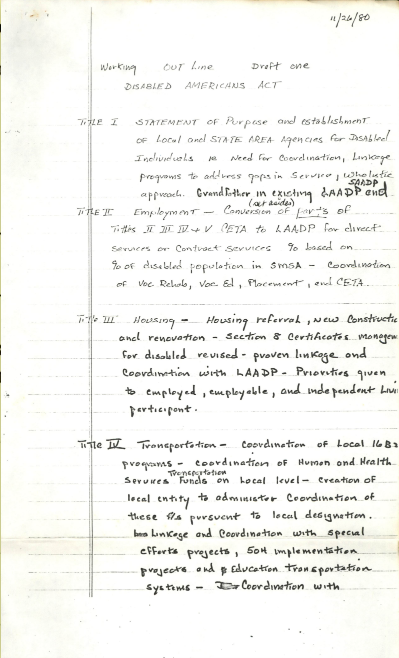
First draft of the "Disabled Americans Act" from 1980
-
“…I believe it is possible to help people move out of nursing homes and State-supported institutions, move into the community, to be more productive, and enjoy a better quality of life.”
- Lex Frieden in his testimony to the House Committee on Education and Labor, Subcommittee on Select Education on March 21, 1983
Under Frieden’s leadership, the NCH released the influential 1986 report Toward Independence: An Assessment of Federal Laws and Programs Affecting Persons With Disabilities - With Legislative Recommendations. This report analyzed existing challenges to disabled Americans in employment, transportation, housing, education, and community services. Perhaps the most impactful recommendation made in Toward Independence was to pass comprehensive disability legislation.
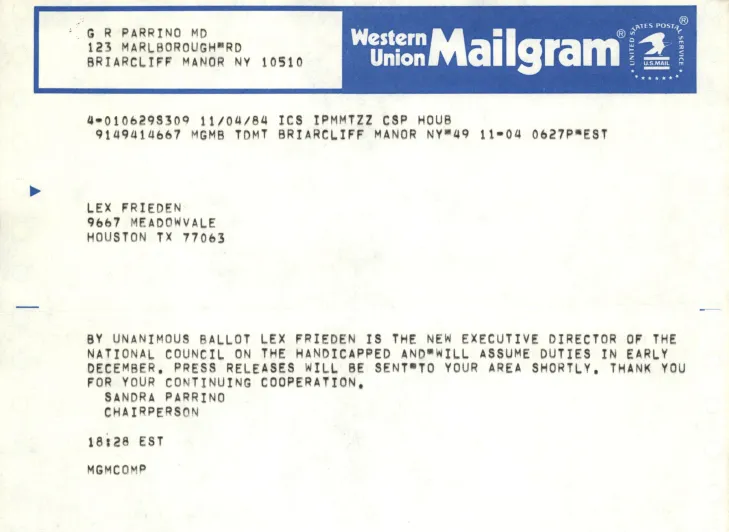
Lex Frieden becomes the new Executive Director of the National Council on the Handicapped. -
"The Council recommends the enactment of a comprehensive law requiring equal opportunity for individuals with disabilities, with broad coverage and setting clear, consistent, and enforceable standards prohibiting discrimination on the basis of handicap."
- The National Council on Disability, Toward Independence: An Assessment of Federal Laws and Programs Affecting Persons with Disabilities (1986): vi.
-
100th Congress (1987-1988)
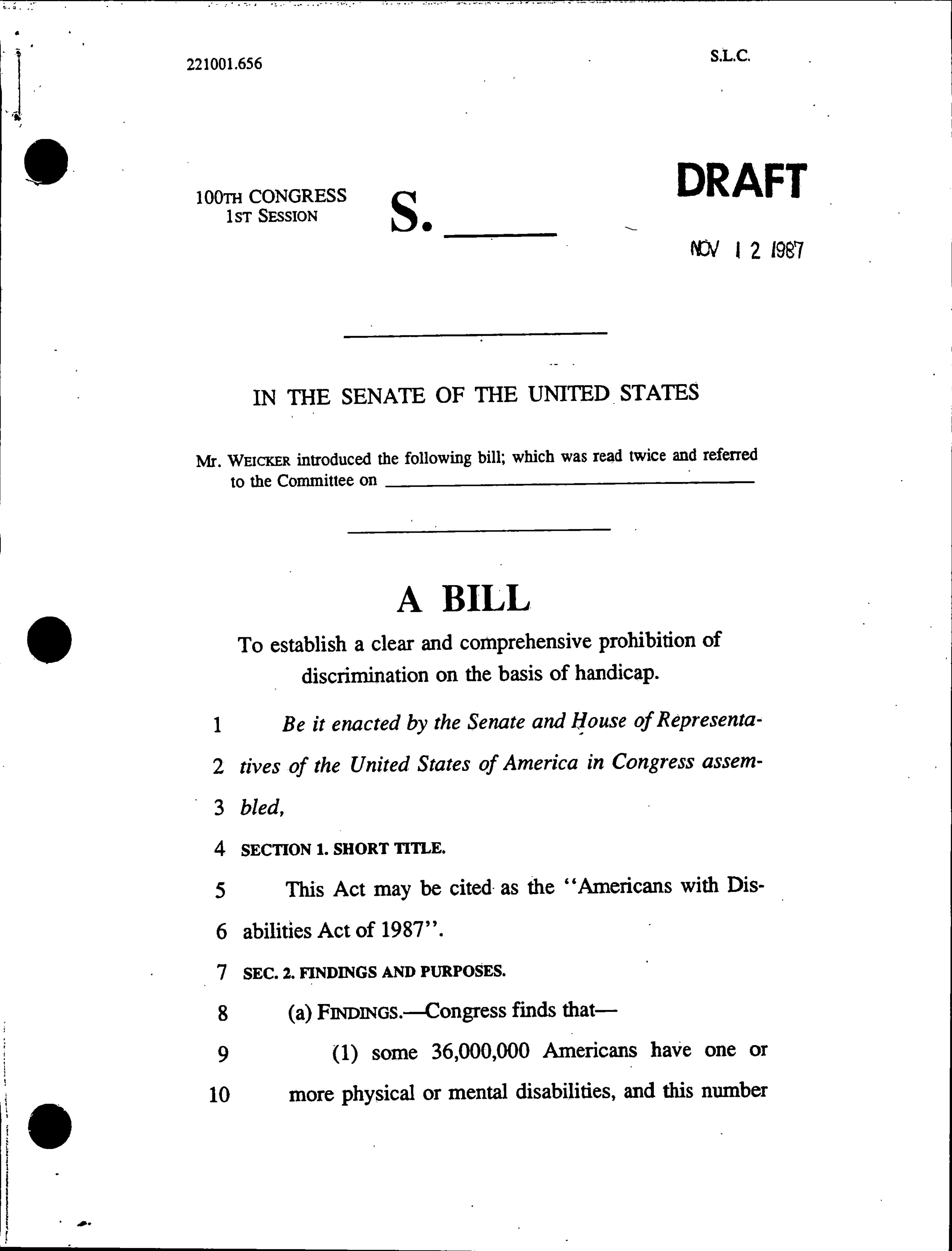
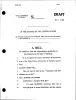
By 1987 the Disability Rights Movement had a clear concept of a comprehensive rights bill. Senator Tom Harkin introduced the first draft of the Americans with Disabilities Act to the 100th Congress in 1988. This focused primarily on employment, housing, and architectural discrimination and accessibility. Based on Section 504’s history, the new bill included sections on enforcement and effective dates to clarify implementation. Introduced late into the congressional term, the 1988 version of ADA laid the groundwork for its later success. Initial hearings raised awareness for the lack of disability rights and set the stage for the bill’s reintroduction in 1989.
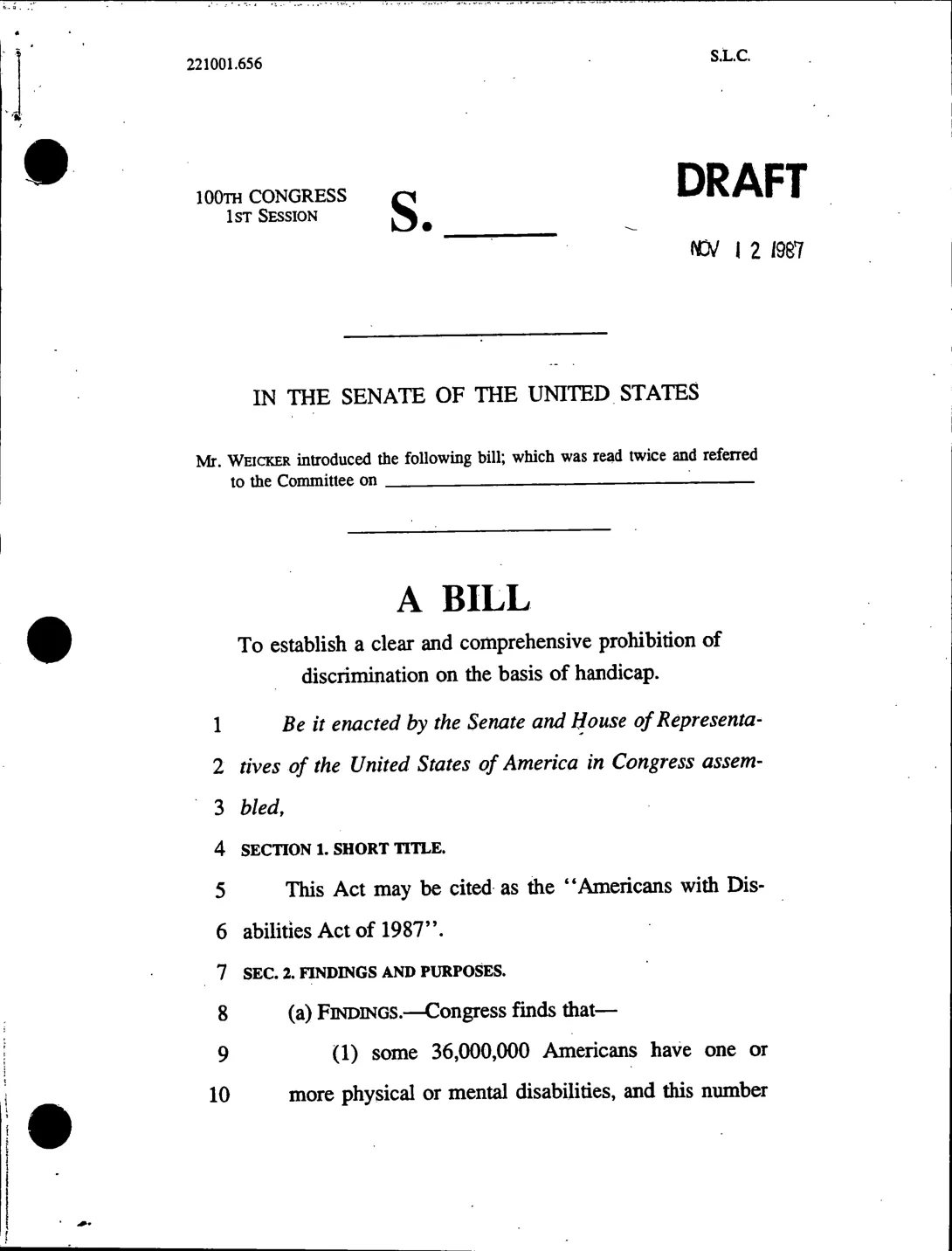
The beginning of the first official draft of the Americans with Disabilities Act. -
Making Changes
The first version of ADA became known as the “flatten the earth bill” by the disability community. It contained aggressive language, requiring accessibility accommodations to be made within two years of the bill’s passage. It received significant pushback from the business community, who referred to it as the “bankruptcy bill.” Small businesses were particularly concerned that the costs of renovations would be financially unattainable. While the extra time in Congress increased awareness, it also garnered attention from opposition who would later lobby to reduce its scope.
Collecting Stories
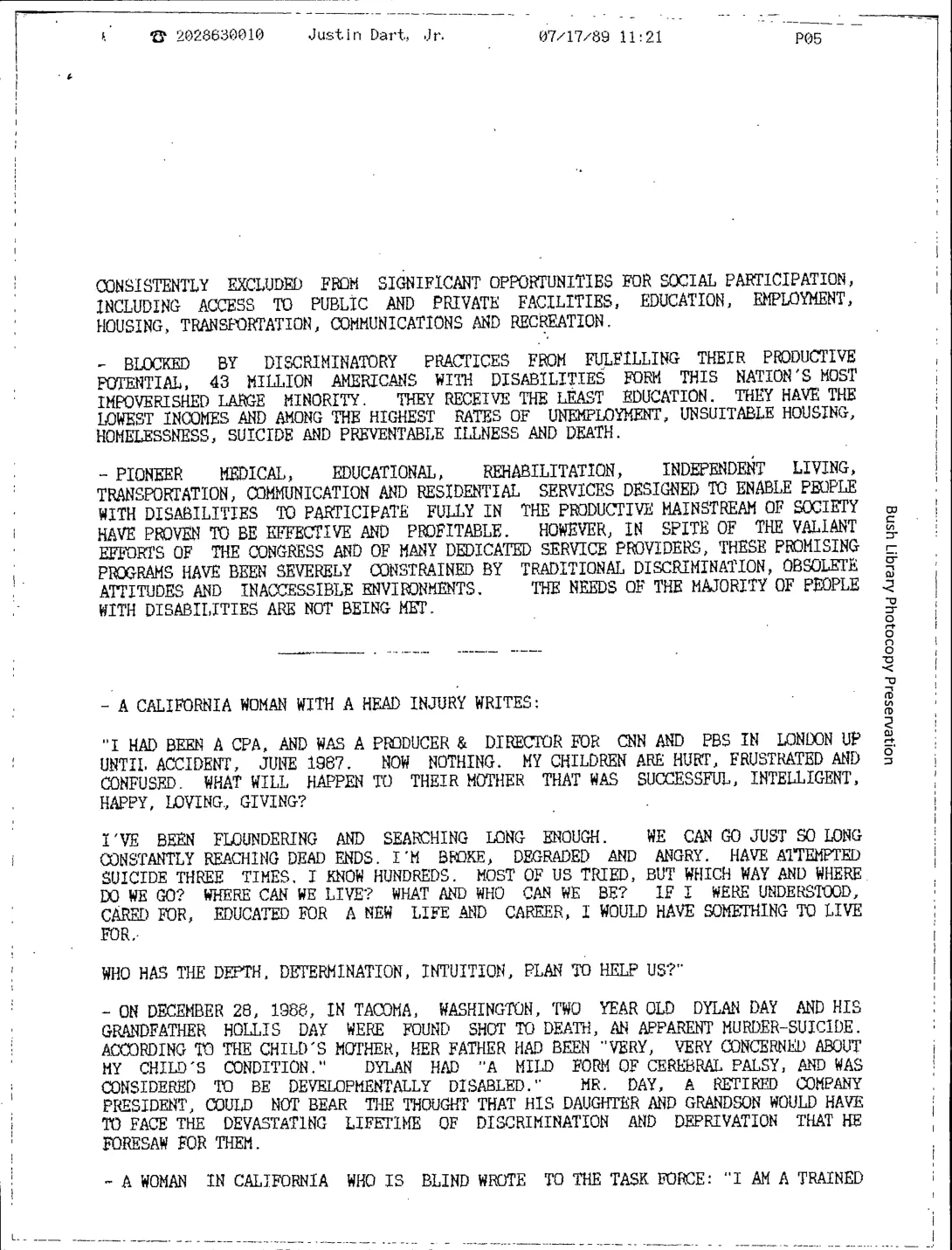
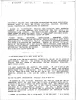
On May 2, 1988, Congressman Major Owens launched the Task Force on the Rights and Empowerment of Americans with Disabilities. Led by Justin Dart, Elizabeth Boggs, and Lex Frieden, this task force traveled around the country to host public forums and collect petitions, testimonies, press coverage, support letters, and detailed records of prejudice experienced by the disability community that became known as “discrimination diaries.” These proved valuable in explicitly documenting the many ways that citizens faced barriers and discrimination in their everyday lives. With this in mind, the disability community prepared for a strong push to pass the ADA. This culminated in the Capitol Crawl protest on March 12, 1990, in which protesters discarded their disability aids and physically crawled up the steps to call attention to the inaccessibility of existing standards.

Testimonies from the "Discrimination Diaries." -
101st Congress (1989-1990)
On May 19, 1989, Iowa Senator Tom Harkin introduced the Americans with Disabilities Act in the Senate as S.933. In the House, California Representative Anthony Coelho introduced an identical bill (H.R. 2273). The bill received bipartisan support in both chambers, with 250 cosponsors in the House and 63 in the Senate. During the next year, Congress worked to amend and pass the Americans with Disabilities Act.
Congressional Connections
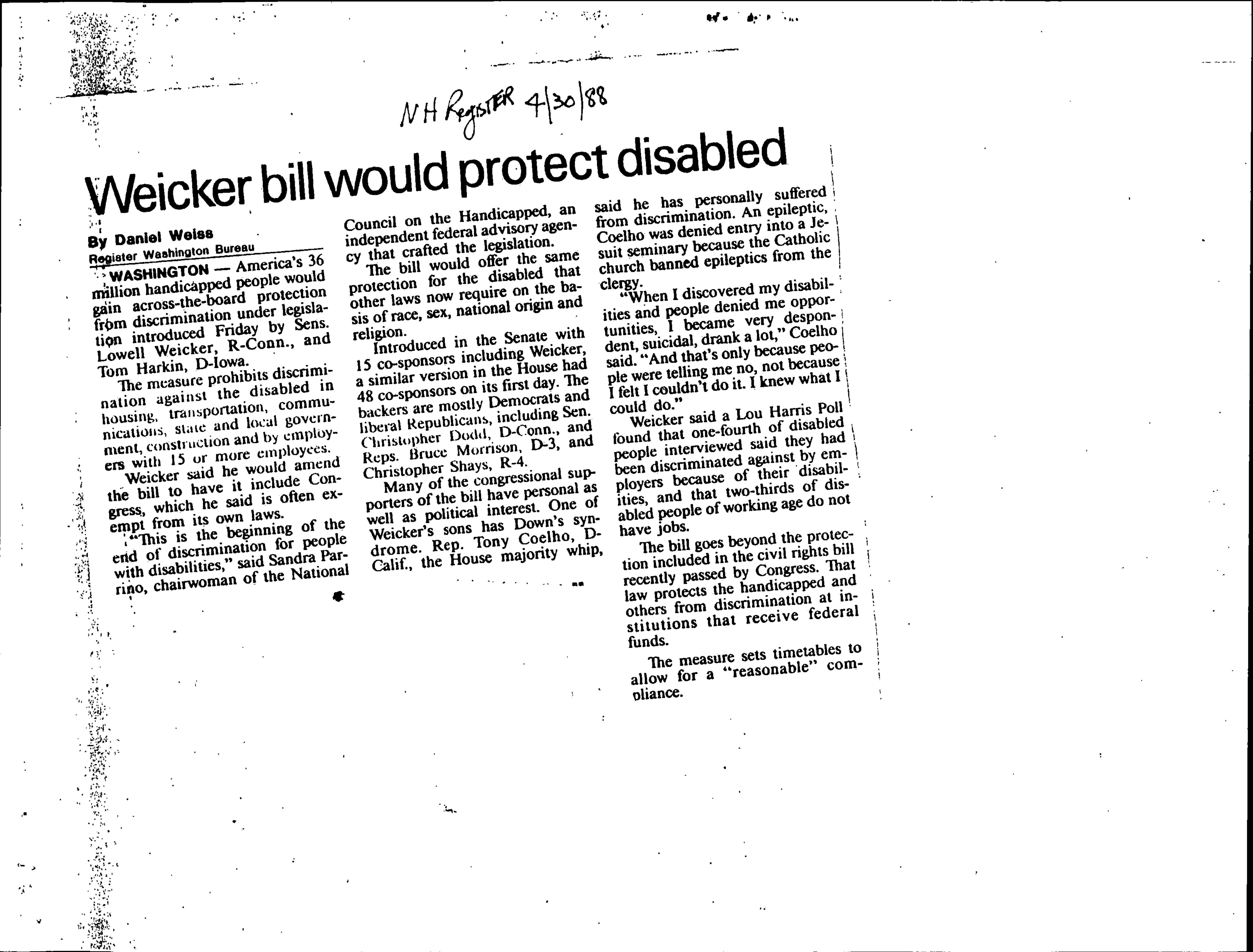
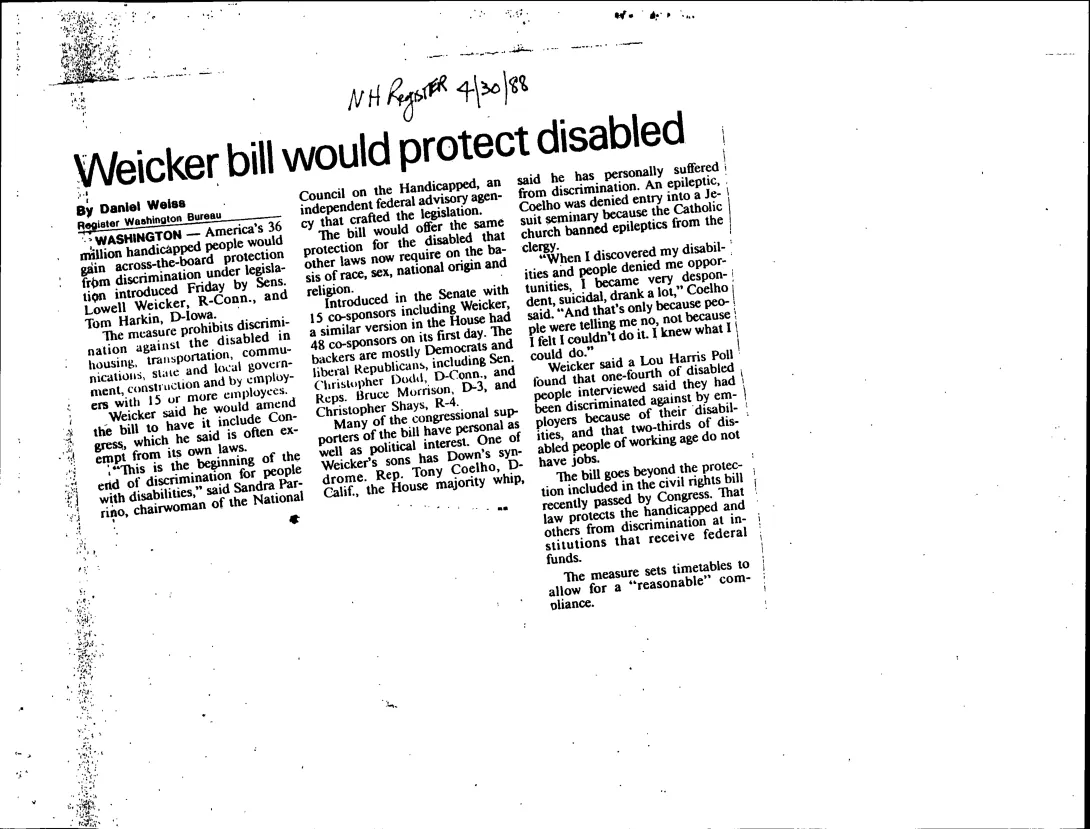
Many congresspeople had deeply personal connections to the Americans with Disabilities Act. This included the chairs of the Senate Subcommittee on the Handicapped, Lowell Weicker and Tom Harkin. Senator Weicker had a son with Down’s syndrome and Senator Harkin grew up alongside his deaf brother. In the House, co-sponsor Anthony Coelho was diagnosed with epilepsy as a teenager. Supporters of the bill understood that many Americans were intimately familiar with the challenges they faced, even if they may not be disabled themselves.
Article about Senator Weicker's introduced legislation in 1988. -
Passing the Senate
Once introduced, the Senate referred S.933, or the Americans with Disabilities Act, to the Committee on Labor and Human Resources and the Subcommittee on Handicapped. The Senate submitted a total of 20 amendments as they worked on the bill. Fourteen made it to the final bill, with topics ranging from technical and clarifying statements to telecommunications and public transportation. The Senate passed the amended bill on September 7, 1989, with a vote of 76 to 8, just under four months from its initial introduction. The bill was then passed onto the House of Representatives for further review and approval.
-
Passing the House of Representatives
The House referred their version of the ADA, H.R. 2273, to the committees on Education and Labor, Energy and Commerce, Public Works and Transportation, and Judiciary. Through hearings, they gathered expert opinions and testimonials in the United States Capitol, in Houston, Texas, and in Indianapolis, Indiana. The House voted on the bill with amendments in May 1990, which focused on compliance, employment, and communicable diseases. Some proposed amendments focused on language and public transportation failed.
After months of hearings, debates, and amendments, the House of Representatives passed the Americans with Disabilities Act on May 22, 1990.
-
House Amendment 448
This failed amendment to the ADA attempted to add the language “undue hardship” to the bill. The disability community particularly opposed this, as similar language was used when the Regulatory Relief Task Force attempted to deregulate Section 504 of the 1973 Rehabilitation Act. Disability advocates argued that accessible public accommodations should not be qualified as “undue hardship,” as this minimized the adversities that members of the disability community regularly experienced.
-
House Amendment 450
This amendment framed infectious and communicable diseases in food handling positions as a public health issue, but effectively targeted those diagnosed with HIV/AIDS. The disability community opposed this addition. If Congress included this language, the bill would not encompass the full spectrum of disabilities as ruled in the 1987 Nassau v Arline Supreme Court case. Advocates insisted that the freedoms outlined in this bill must be for the entire disability community.
-
Reconciling Differences
Once the House approved its bill with amendments, the Senate reviewed for final approval. Members from both chambers reconciled S.933 and H.R. 2273 into one bill. Congress proposed two final amendments on July 11, 1990 to finalize language related to infectious disease. One version left the regulation to state health departments; the other attempted to federally restrict employment opportunities for individuals with communicable diseases. The Senate ultimately voted against restriction, which sustained an inclusive Americans with Disabilities Act.
“Nothing in this Act shall be construed to preempt, modify, or amend any State, county, or local law, ordinance, or regulation applicable to food handling which is designed to protect the public health from individuals who pose a significant risk to the health or safety of others, which cannot be eliminated by reasonable accommodation, pursuant to the list of infectious or communicable diseases and the modes of transmissibility published by the Secretary of Health and Human Services.”
- Americans with Disabilities Act of 1990, Title I, Section 103