Marking a New Era
The ADA at Work: Rights in Action
-
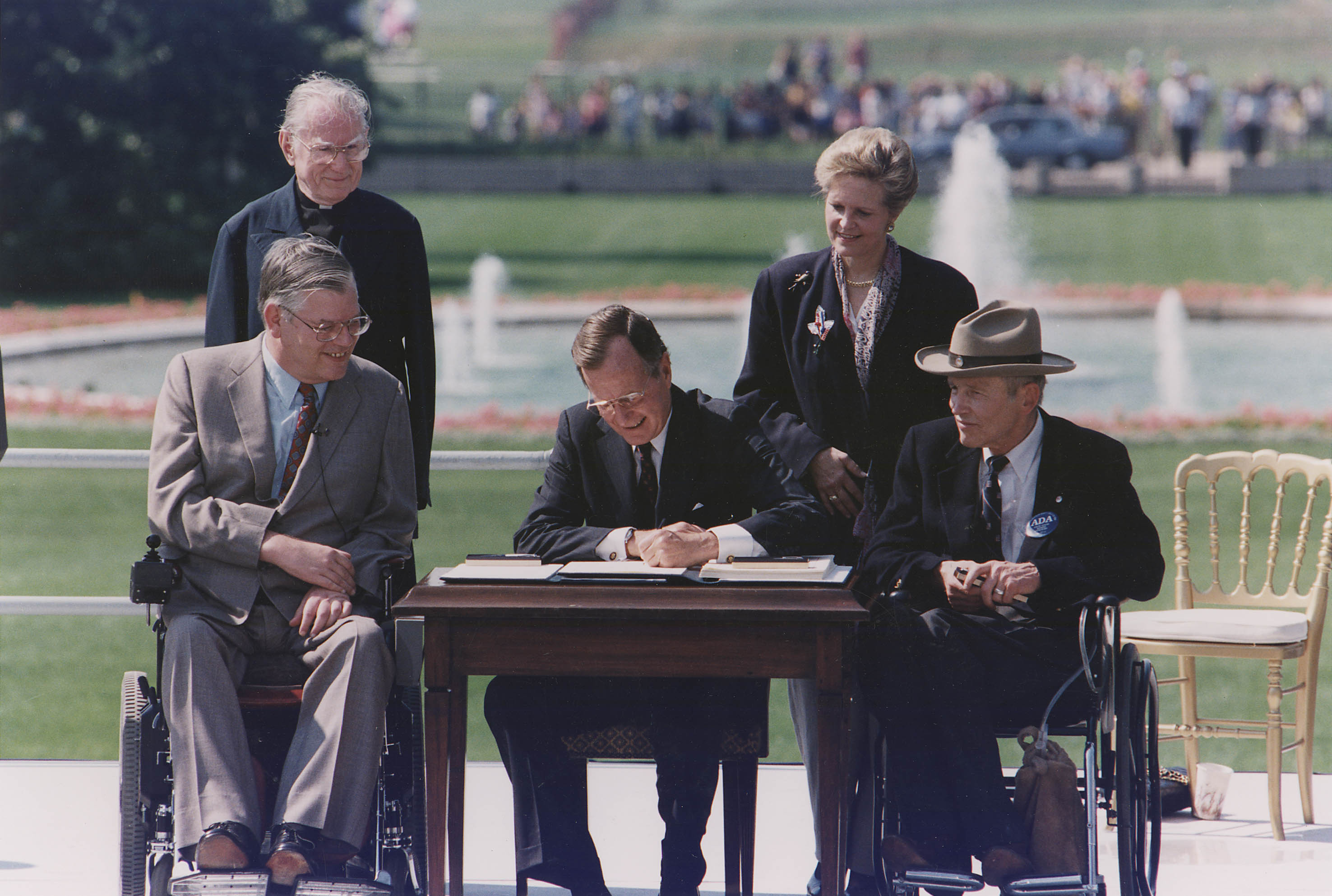
President Bush signs the Americans with Disabilities Act, July 26, 1990
-
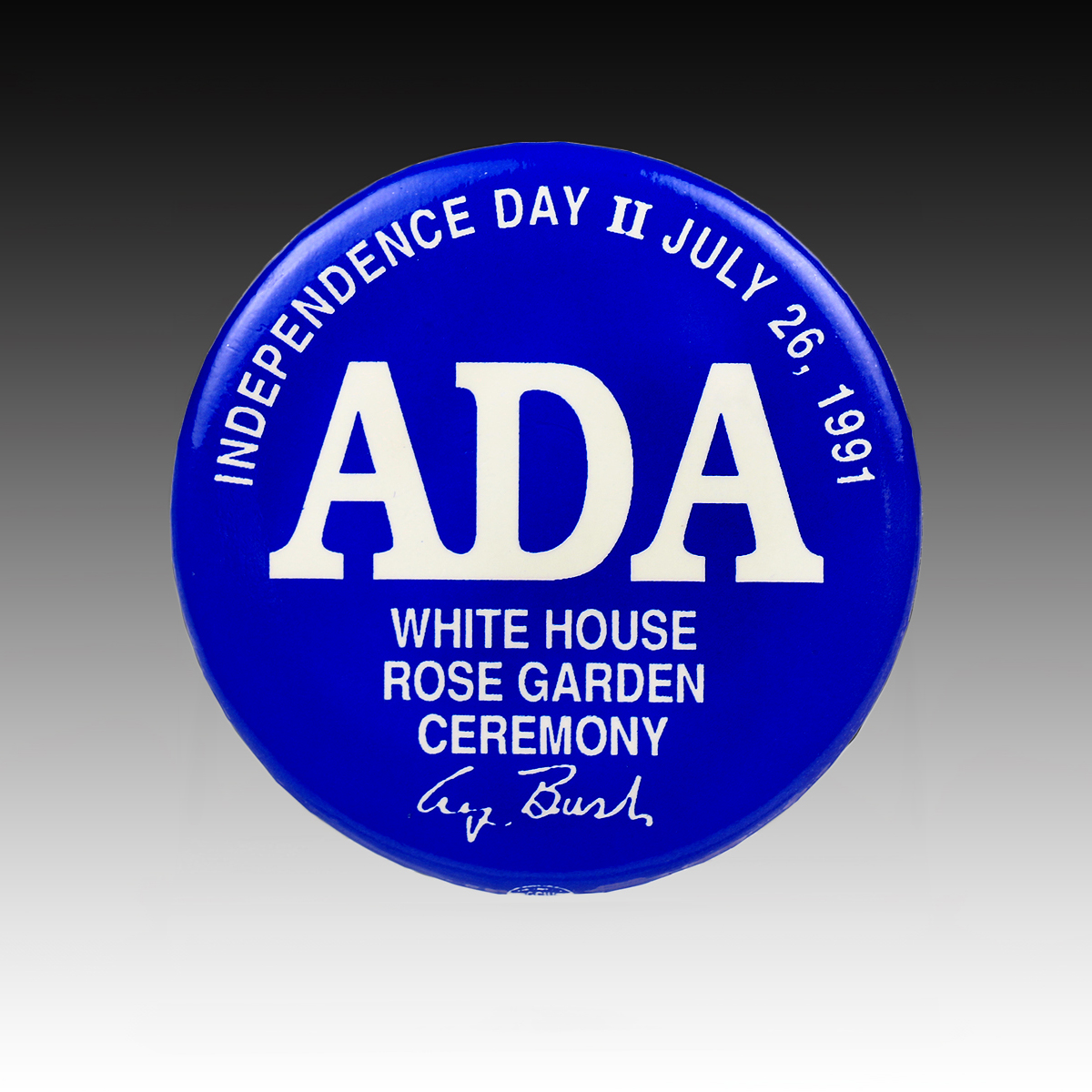
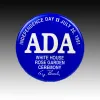
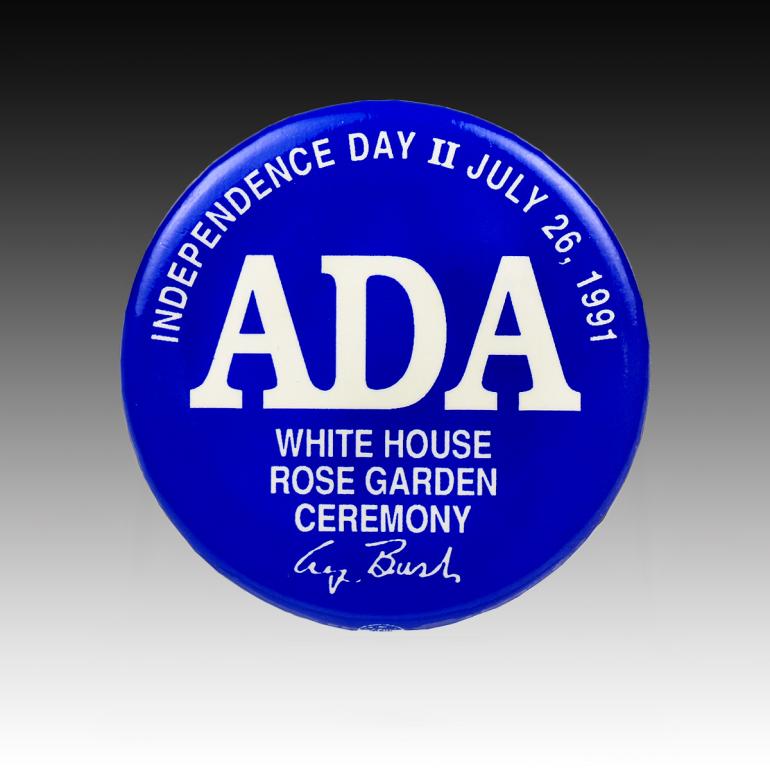
This button commemorates the formal implementation of regulations outlined in the Americans with Disabilities Act of 1990.
-
National Voter Registration Act (NVRA)
According to the United States Election Assistance Commission, one-sixth of the American electorate lives their life with a disability. Therefore, the NVRA required that voter registration opportunities be made available in public agencies that serve individuals with disabilities. This act ensured that people with disabilities, who had historically faced barriers to registration and voting, could more easily engage the electoral process.
-
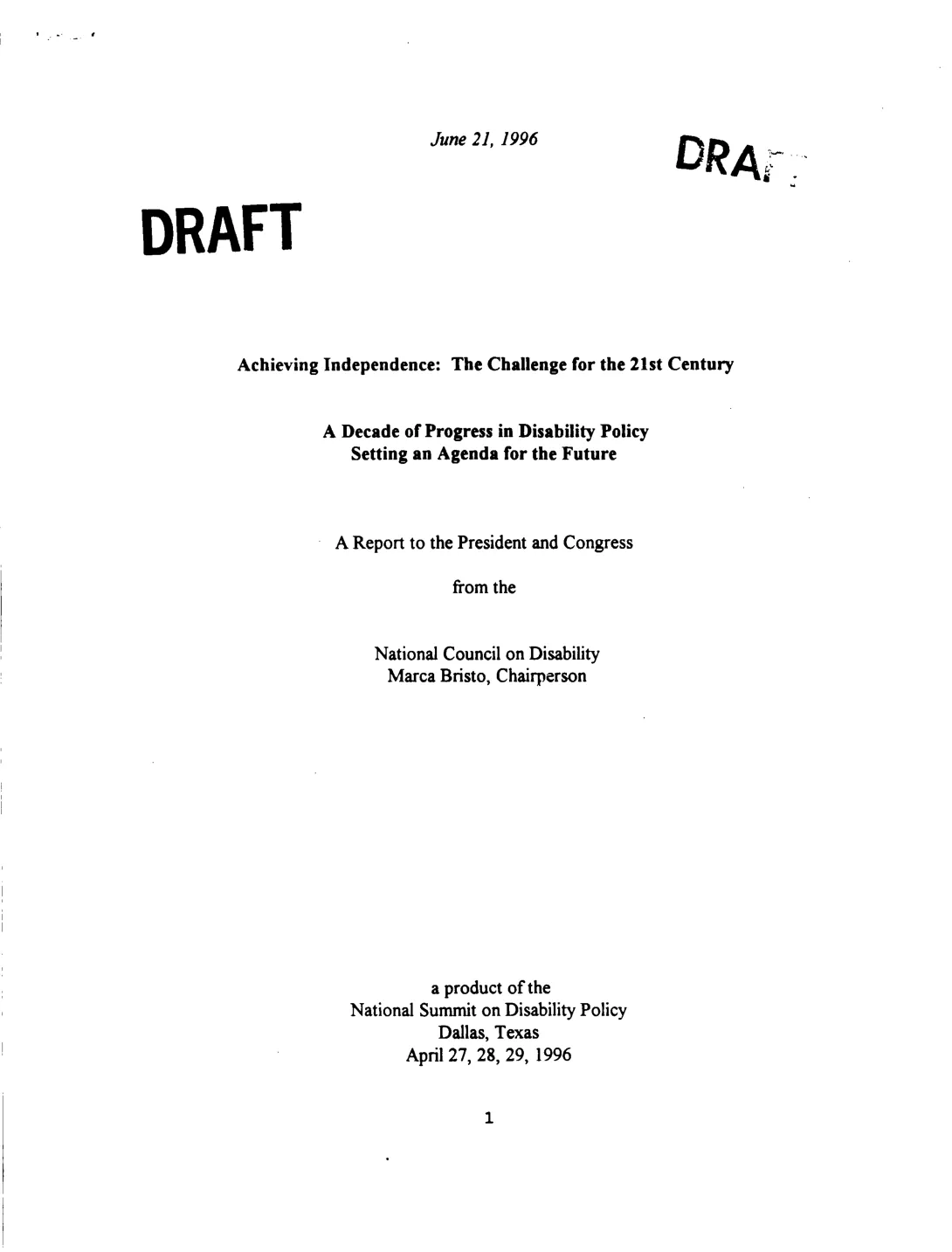
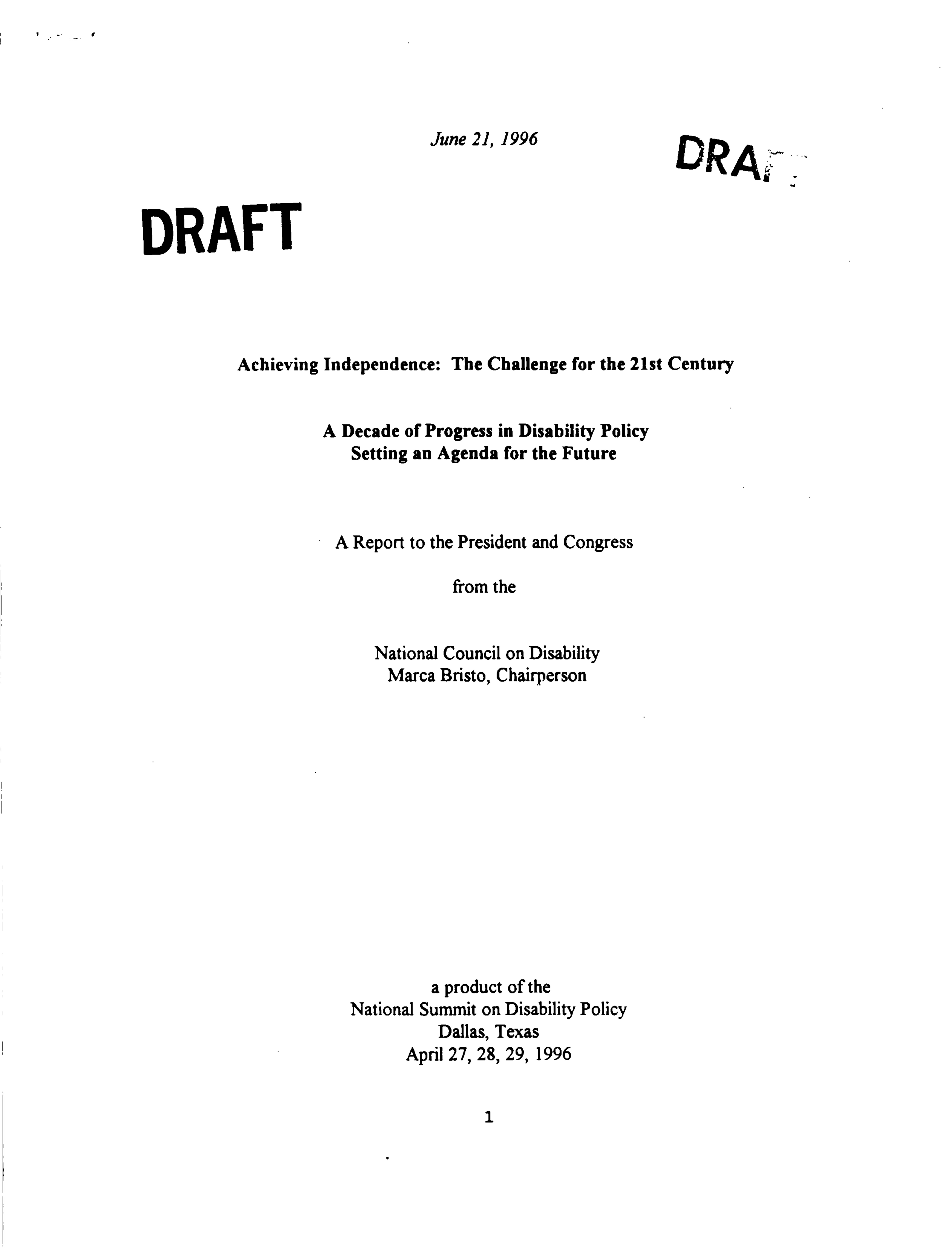
Achieving Independence: The Challenge for the 21st Century
Published in July 1996, this report by the National Council on Disability (NCD) was a sequel to Toward Independence: An Assessment of Federal Laws and Programs Affecting People with Disabilities, which was published in 1986. In a letter to President Bill Clinton, Marca Bristo, Chairperson of the NCD wrote “Achieving Independence…calls for real change by and for real people.” This report includes recommendations for amendments to the ADA that would more broadly help individuals with disabilities.
Title page of a draft of Achieving Independence. -
Telecommunications Act of 1996
This Act contains two provisions that focus entirely on persons with disabilities. Section 255 requires all manufacturers of telecommunications equipment and providers of service to ensure that they are designed to be accessible to individuals with disabilities. Section 713 ensures that video services are accessible to individuals with hearing and speech disabilities. It requires the Federal Communications Commission to study the level at which video programming is closed captioned. Federal law now requires telecommunications companies to consider accessibility when developing video programming.
-
ADA Amendments Act of 2008
The 110th Congress passed new amendments to the Americans with Disabilities Act in 2008. Led by Representative Steny Hoyer (Maryland) and Senator Tom Harkin (Iowa), this new law clarified questions that arose since the ADA’s passing in 1990. Two Supreme Court cases, Sutton v. United Airlines (1999) and Toyota v. Williams (2002), challenged the intended scope of protections for the disability community. These amendments further defined “disability” within the context of ADA. It also updated specifications for employment accommodations. ADAAA was signed into law by President George W. Bush on September 25, 2008.
-
How Do We Interact With the ADA Today?
Public Right-of-Way Accessibility Guidelines
PROWAG, or the Public Right-of-Way Accessibility Guidelines, translates the ADA’s broad accessibility mandates into specific, technical standards that guide the design and construction of sidewalks, crosswalks, pedestrian signals, curb ramps, and other elements of public pathways. By setting measurable criteria for slopes, surfaces, signal timing, and signage, PROWAG ensures that public spaces are safe and accessible for individuals with mobility, vision, and hearing disabilities. These guidelines promote physical accessibility and foster independence and equal participation in community life—core principles of the Americans with Disabilities Act.
-
"Together, we must remove the physical barriers we have created and the social barriers that we have accepted. For ours will never be a truly prosperous nation until all within it prosper."
- President George H.W. Bush at the Signing of the Americans with Disabilities Act, July 26, 1990