
The Road to Recognition
The beginning of the Americans with Disabilities Act
-
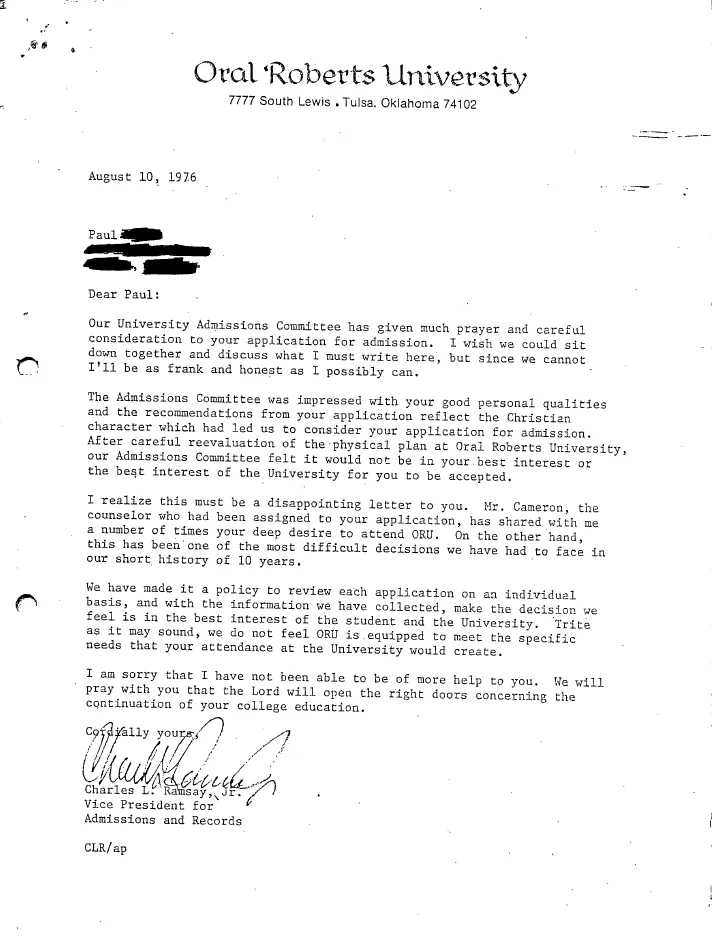
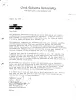
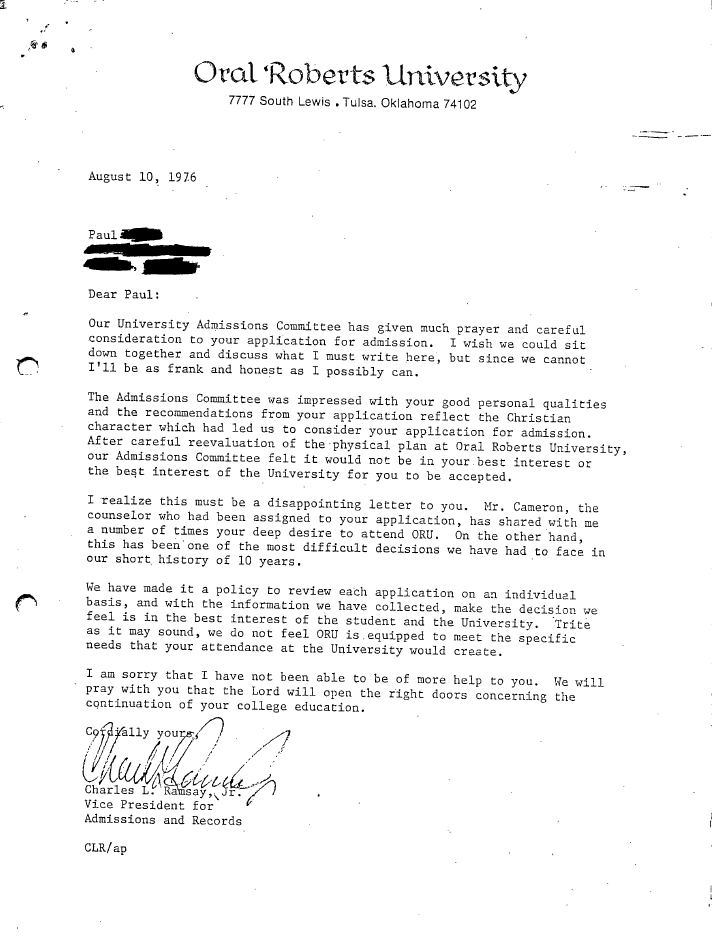
The disability community in the United States has a long history of fighting for their rights. Institutionalization was the primary mode of care for individuals that society considered "handicapped" from the late 19th century through the mid-20th century. The 1960s saw a cultural and legal shift away from asylums and towards a more social model of care. The Independent Living Movement: an integrated society for people of all abilities. These ideas gained momentum during the Civil Rights Movement of the 1960s and 1970s. The document featured here is a 1976 letter from Oral Roberts University demonstrating discrimination faced at higher education institutions. These were submitted by the Oklahoma Coalition of Citizens with Disabilities in their complaint against the university in 1977.
The document featured here is a 1976 letter from Oral Roberts University demonstrating discrimination faced at higher education institutions. These were submitted by the ...Show moreThe document featured here is a 1976 letter from Oral Roberts University demonstrating discrimination faced at higher education institutions. These were submitted by the Oklahoma Coalition of Citizens with Disabilities in their complaint against the university in 1977. Show less -
The Disability Rights Movement
While the Americans with Disabilities Act was signed in 1990, its origins are much older. The Disability Rights Movement began when individuals with disabilities and their supporters challenged societal barriers. Much like the Civil Rights Movement, disability rights advocates participated in federal sit-ins, obstructed inaccessible transportation, and protested in the streets. Thus began the long road to the Americans with Disabilities Act.
-
The Disability Rights Movement
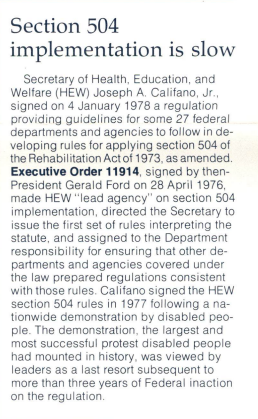
The 504 sit-ins at the Health, Education, and Welfare (HEW) regional offices across the United States were a turning point in disability legislation. These protests increased visibility of the lack of Section 504 regulation in the four years following the passage of the Rehabilitation Act of 1973. Beginning on April 5, 1977, the longest sit-in lasted 26 days in San Francisco. The community, including members of the Black Panther Party, supported these protesters throughout their demonstration. The success of these sit-ins was twofold. Not only did they have a direct effect on the signing of the regulations, but they also strengthened connections between disability activists and the wider civil rights community.
-
Rehabilitation Act, Section 504
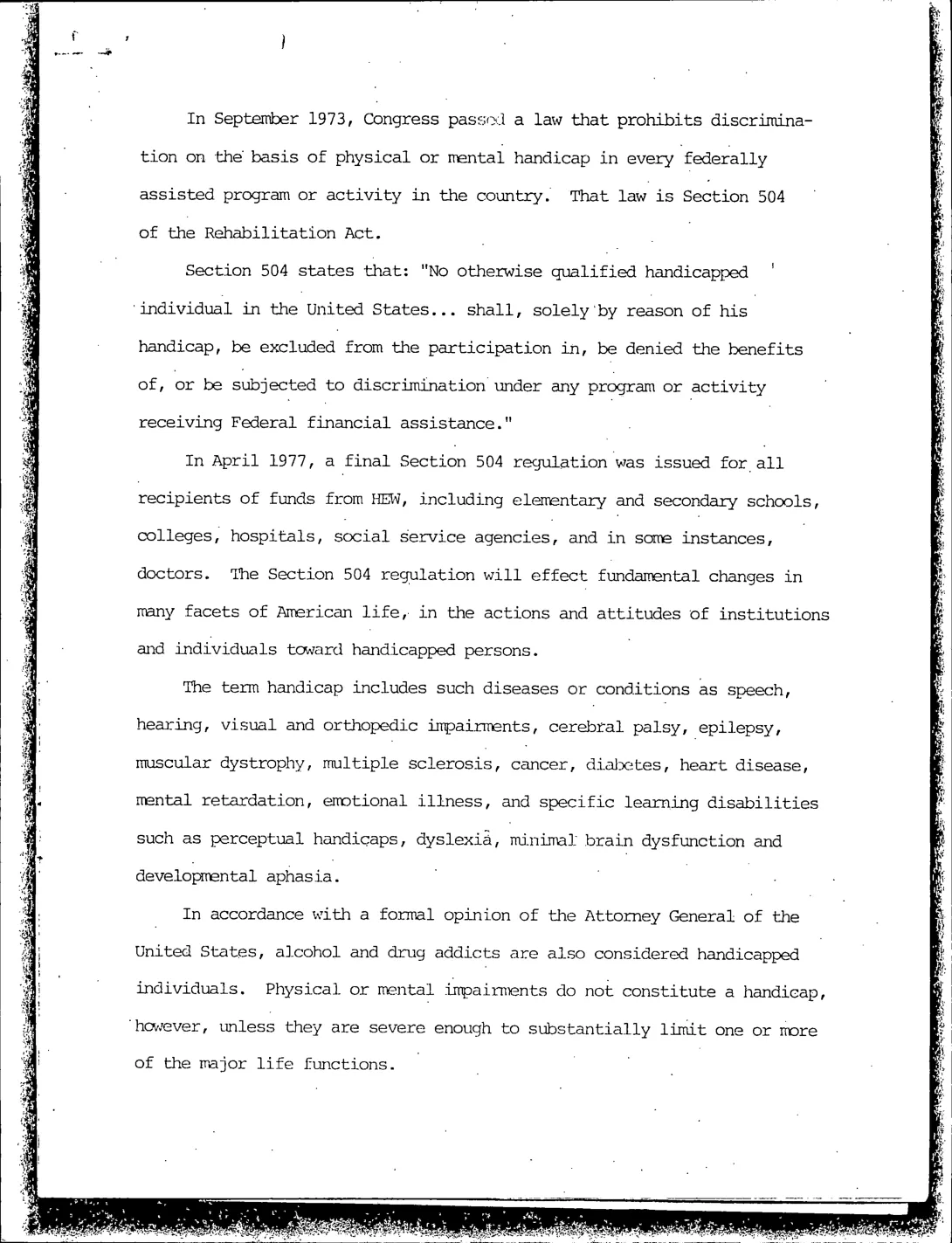
The passage of Section 504 of the 1973 Rehabilitation Act, during the Nixon Administration, banned discrimination on the basis of disability by recipients of federal funds, which was modeled after Title VI of the Civil Rights Act of 1964 (prohibited discrimination based on race, color, or national origin).
This legislation helped people understand that discriminatory practices rather than disability itself resulted in lower socioeconomic status of people with disabilities.
This moment marked the first time that people with disabilities were considered a protected class.
The Department of Health, Education, and Welfare (HEW) defined what non-discrimination meant for disabled people. HEW Secretary Joseph A. Califano, Jr. signed the final 504 regulation on April 28, 1977. These regulations would form the basis of the ADA.
-
504 Regulations
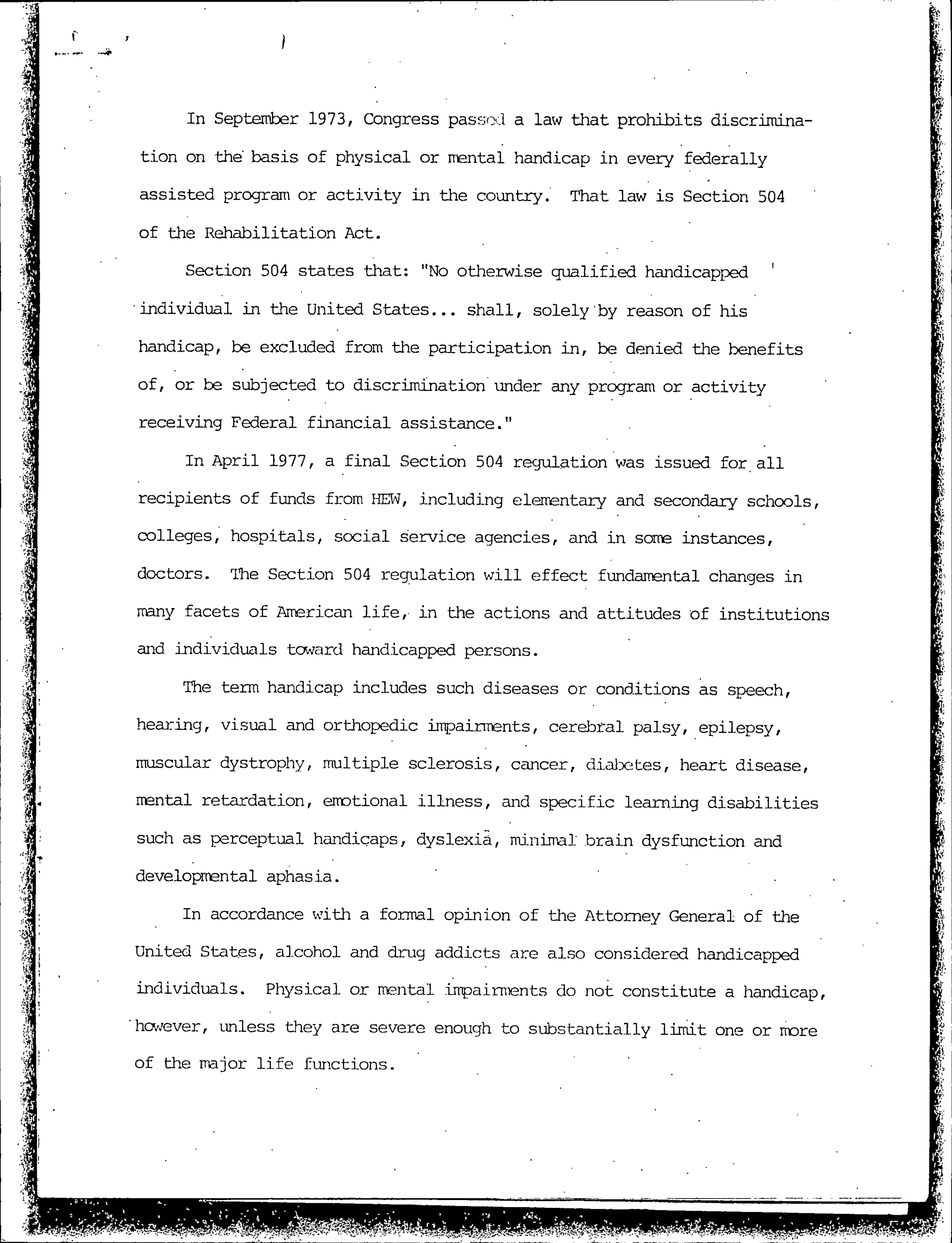
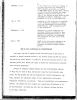
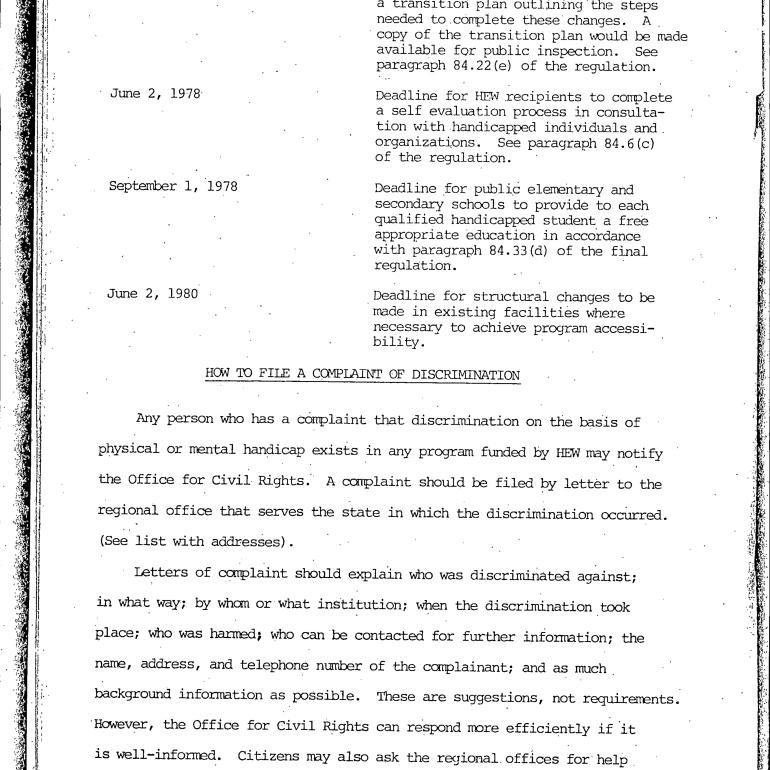
Congress amended Section 504 in April 1977, which is shown in the document featured here. The updates affected all "prerecipients of funds from HEW, including elementary and secondary schools, colleges, hospitals, social service agencies, and in some instances, doctors." (U.S. Department of Health, Education, and Welfare, Office for Civil Rights, Schedule of Future Events for Section 504 Compliance (1977): 1). Section 504 prohibited discrimination based on physical or mental disability in every federally assisted program in the United States. Federal institutions could no longer legally refuse services, from education and social services to employment, to anyone with a disability.
View the quoted document here.
U.S. Department of Health, Education, and Welfare, Office for Civil Rights, Schedule of Future Events for Section 504 Compliance (1977): 1. -
Under the Threat of Regulatory Relief
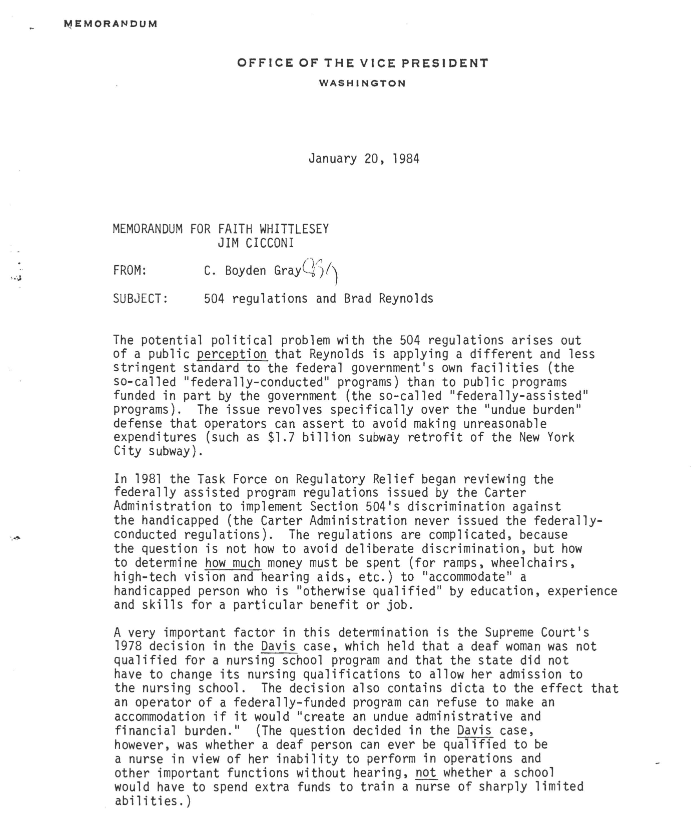
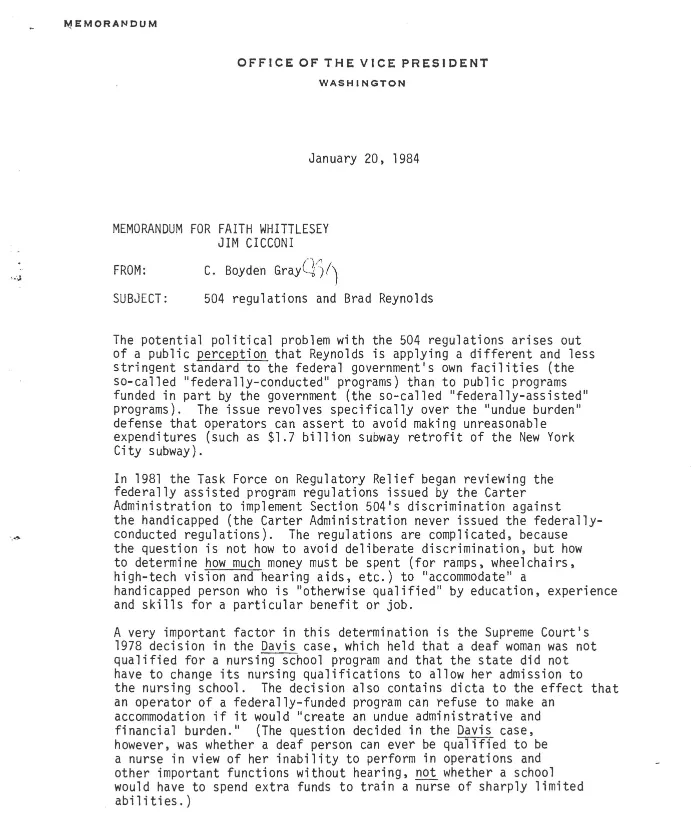
Disability organizations collaborated throughout the 1980s to maintain the rights provided in the 1973 Rehabilitation Act. In 1981 Ronald Reagan announced the Regulatory Relief Task Force, led by then-Vice President George H.W. Bush, which investigated 27 "economically burdensome" regulations to potentially cut. Section 504 was one such target. The decision to deregulate 504 became public in 1983. The disability community rallied, sending tens of thousands of letters to the White House. Their efforts ultimately saved Section 504. This victory highlighted the need for a comprehensive disability rights bill.
Click here to read the explanation of changes in the Department of Justice's December 16, 1983 notice of proposed rulemaking.
Correspondence regarding Section 504 and the Regulatory Relief Task Force. -
Civil Rights Restoration Act (CRRA)
In the 1980s, the disability community worked to restore civil rights protections that had been weakened or eliminated by court rulings. One of the most important efforts was the Civil Rights Restoration Act (CRRA), which was introduced in 1984 and passed in 1988. President Reagan initially vetoed the bill, claiming that it represented government overreach, but the U.S. Senate overrode his veto.
Click here to read the statement of the National Council on Disability by Lex Frieden before the U.S. Senate Committee on Labor and Human Resources on April 1, 1987.
-
Landmark Court Cases
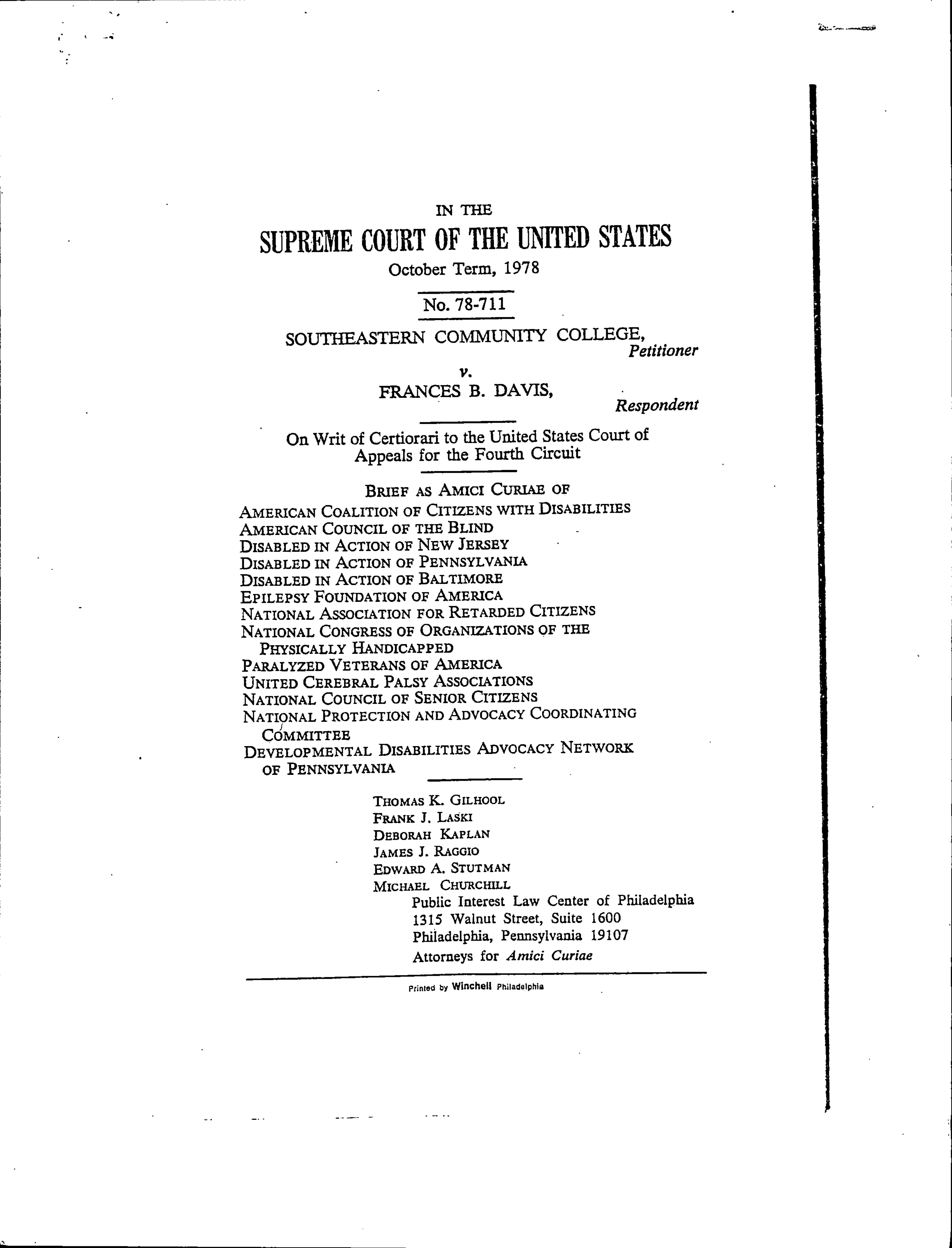
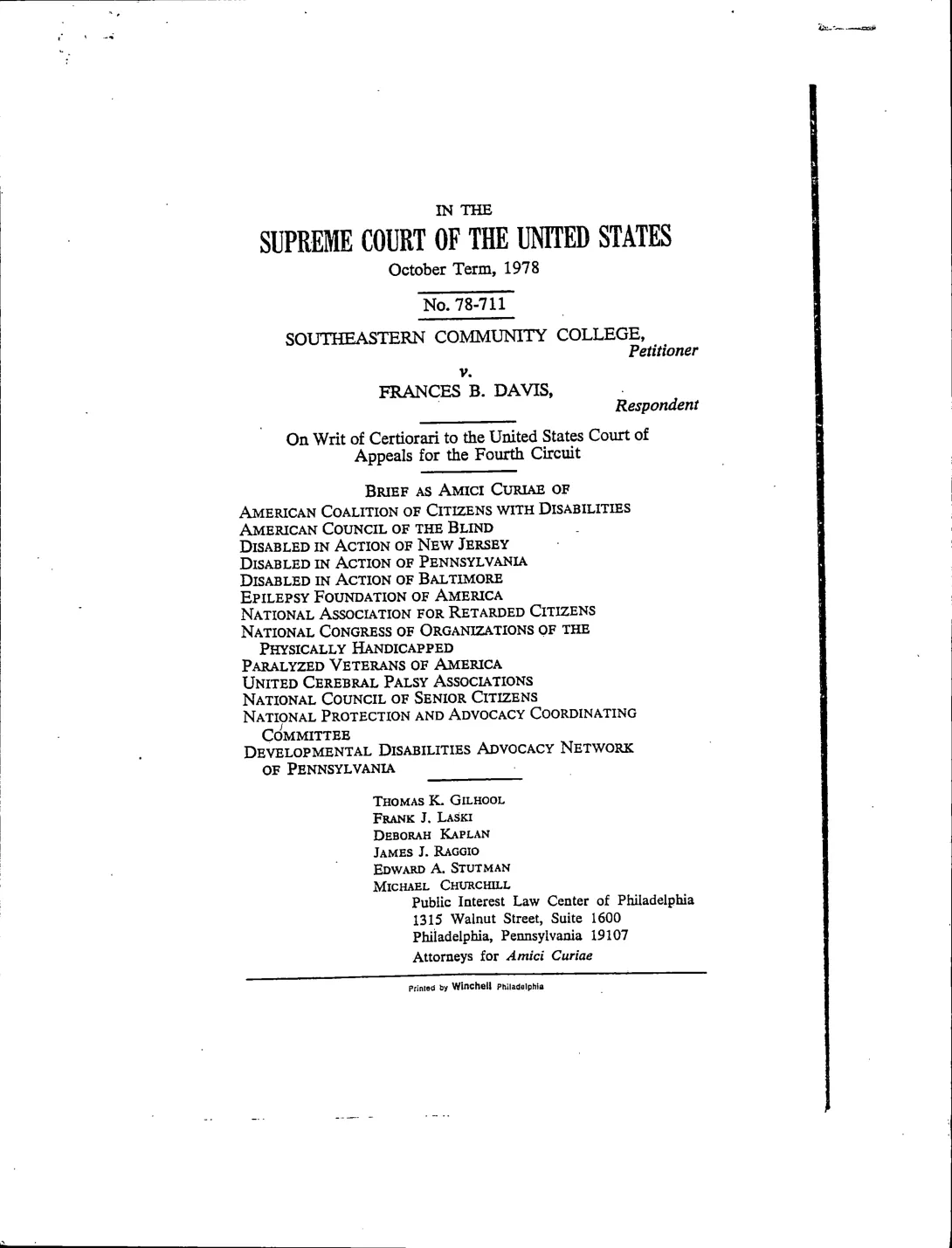
- Southeastern Community College v. Davis (1979): This case represents the first Section 504 case decided by the Supreme Court. It centered on a woman with a hearing disability, Francis B. Davis, who was denied acceptance to a community college nursing program. The Court ruled that the college did not violate the law because acceptance of the applicant would have required the school to lower its admissions standards, which Section 504 does not require.
- Grove City College v. Bell (1984): The disability rights community advocated the reversal of Grove City College v. Bell (1984), which restricted the reach of statutes the prohibited discrimination based on race, ethnic origin, sex, & disability. This coalition to overturn the decision was the first time the disability community, minority, and women's advocacy groups worked together to affect major legislation.
- School Board of Nassau County v. Arline (1987): This case asked if Section 504 of the Rehabilitation Act of 1973 extended relief to individuals with contagious diseases (tuberculosis, in this case). The Court's ruling was yes, based on the qualification criteria for "handicapped status" provided by the Department of Health and Human Services (HHS).
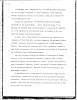
First page of amicus curiae brief for Southeastern Community College v. Davis (1978). -
Beyond Section 504
The inspiration and tactics learned from the Civil Rights Movement were visible in the long fight for the Rehabilitation Act of 1973, Section 504, regulations. The years after its passing made apparent a need for more intensive support for disability rights in America. Activists across the disability community united in protest. In 1985, the Virginia House of Delegates passed the Virginians with Disabilities Act, further pressuring the Federal Government to take action. The community shared ideas and envisioned new legislation with a strong purpose: passage of a single, comprehensive law affirming these hard-won rights.